


Kerbing an alloy wheel is easy to do, and the damage can look worse than it really is. If your MOT is coming up, the obvious question is: will that damaged alloy cause the car to fail?
In many cases, no. Cosmetic kerb damage such as scuffs, scratches and damaged paint or lacquer is not listed as a standalone wheel defect in the current DVSA MOT inspection criteria.
The concern starts when the impact has damaged the wheel itself, for example, if the alloy is cracked or badly distorted, or if the tyre has also been affected.
Here is what the current MOT rules say and what you should look for before your test.
Cosmetic kerb damage does not automatically cause an MOT failure.
Surface problems such as:
are not listed as individual MOT wheel defects by the DVSA.
More serious damage is different. Under the current MOT inspection manual:
The key difference is therefore not how noticeable the damage looks. It is how much the impact has affected the wheel itself.
Most kerb damage happens around the outside edge of the alloy where the wheel has rubbed or struck the kerb.
Typical cosmetic damage includes:
These types of marks can make a wheel look rough, particularly on dark or diamond-cut alloys, but appearance is not what the MOT tester is judging.
The DVSA's road-wheel criteria focus on the physical condition and security of the wheel. Cosmetic scratches, kerb rash and damaged paint are not listed as standalone reasons for failure.
That does not mean every scraped wheel is automatically fine. A hard impact can cause more than surface damage, so it is worth checking the wheel and tyre properly rather than looking only at the visible scuff.
A light scrape and a heavy kerb strike can leave very different problems behind.
A crack in the alloy is not cosmetic damage. The DVSA MOT inspection manual classifies any fracture or welding defect on a wheel as a Dangerous defect.
If a mark appears to run into the metal rather than simply through the paint or lacquer, do not assume it can just be refinished. It needs proper assessment.
A small fracture can be more significant than a large area of superficial kerb rash, even though the cosmetic damage may look worse at first glance.
Drivers normally refer to this as a buckled wheel. The DVSA uses the term distorted wheel.
A badly distorted wheel is classed as a Major defect. If the distortion is severe enough that the wheel or tyre is likely to detach, it is classed as Dangerous.
There is no simple MOT rule saying that a wheel can be bent by a certain number of millimetres and still pass. After a harder impact, signs that deserve attention include:
These symptoms do not automatically prove that the alloy is buckled, but they are reasons to have the wheel checked rather than treating the problem as purely cosmetic.
The tyre sits directly beside the part of the wheel most likely to hit a kerb, so it should always be checked after a harder impact.
Look for:
Some tyre defects can also cause an MOT failure. The DVSA classifies structural bulges, tears and exposed or damaged cords as Dangerous defects. You do not need to diagnose the tyre yourself. If you find significant sidewall damage, have it inspected.
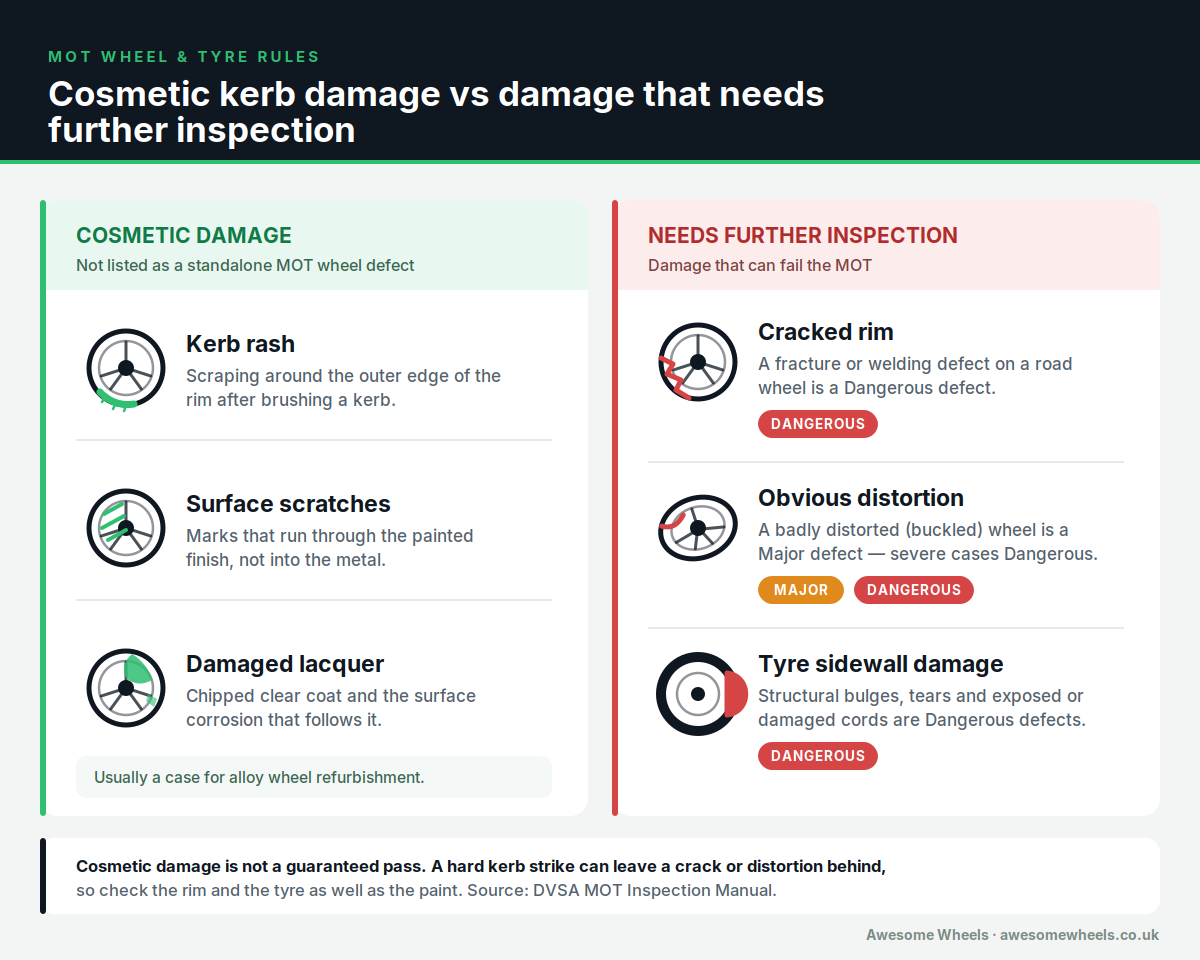
You cannot confirm every wheel is structurally sound just by looking at it, but there are useful signs that help separate ordinary kerb rash from damage that deserves further attention.
Typical examples are:
This is the type of damage commonly dealt with through alloy wheel refurbishment.
Seek further assessment if you notice:
One of the easiest mistakes is judging the seriousness of wheel damage purely by appearance. A long scrape can look terrible while remaining limited to the finish. A much smaller crack may be far more significant.
If the damage is cosmetic and the wheel is suitable for refurbishment, yes. We, at Awesome Wheels. repair common appearance-related alloy damage including kerb marks, scratches, scuffs, surface corrosion and damaged finishes.
You can find out more about the process on our Alloy Wheel Refurbishment service page.
The refurbishment process is there to restore the wheel's surface and finish. It should not be used to hide a structural problem.
If the wheel appears cracked or significantly distorted, the condition of the wheel needs to be addressed before its appearance becomes the priority.
Diamond-cut alloys often show kerb damage particularly clearly because the impact breaks through the lacquer and machined metal finish.
The MOT principle is the same: damage to the finish is different from damage to the structure of the wheel. The repair process is different, though.
A diamond-cut wheel has a machined face rather than a conventional painted finish, so suitable damaged wheels need the correct refinishing process. And it’s one of the things we do, where we offer a mobile diamond-cut alloy wheel repair for suitable wheels.
Awesome Wheels provides mobile diamond-cut alloy wheel repair for suitable wheels.
Before taking the car for its MOT, spend a few minutes checking the affected wheel.
A current MOT certificate also does not make new damage safe. GOV.UK's roadworthiness guidance states that drivers remain responsible for keeping their vehicle roadworthy even when it has a valid MOT.
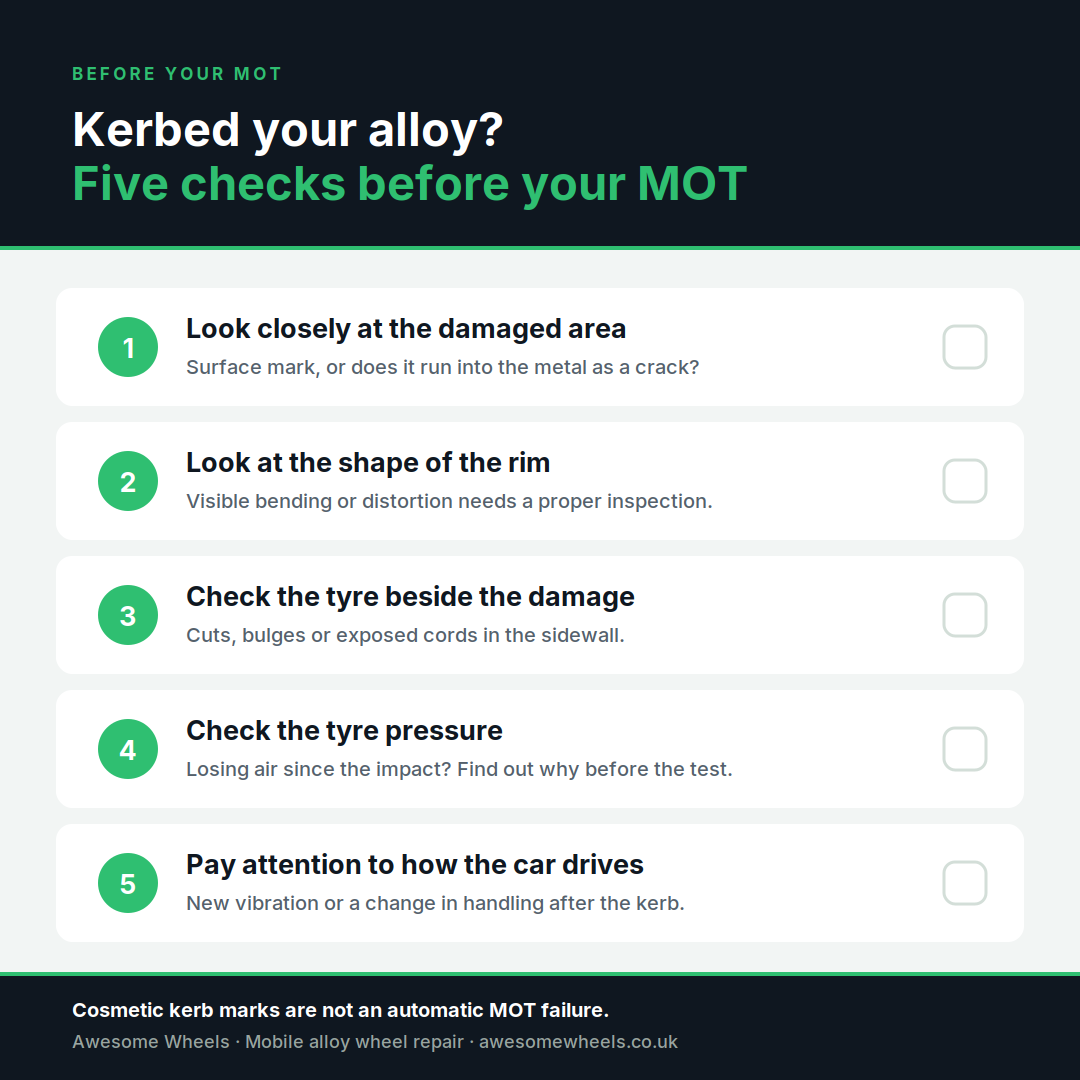
Light cosmetic kerb rash is not listed as a standalone MOT wheel defect. Check that the damage is limited to the surface and that there are no signs of cracking, significant distortion or tyre damage.
Yes. A fracture in a road wheel is classed as a Dangerous defect under the current DVSA MOT inspection criteria.
A badly distorted wheel is a Major defect. If the distortion is severe enough that the wheel or tyre could detach, it is Dangerous.
You do not need to refurbish a wheel simply because cosmetic kerb marks automatically cause an MOT failure - they do not. Refurbishment makes sense if the wheel is suitable for cosmetic repair and you want to restore scratches, scuffs or a damaged finish.
If your alloys have kerb marks, scratches or damaged finishes, you can send us clear photos of the damage for an assessment and quote.